

📘 Using the blueprint to create what you need from the field of Master Mind Projects (MMPROJ) 🧾
From the research of: Joseph Mercado 👨
Content Contributor: Michael Boyd – Facebook 👤
To: Survivalist ⚒️
Blog Post #1441 📌
Re: Building a French Drain 🧱
Date and Time: Thursday, January 1, 2026 at 9:56 p.m. ⏳️
Dear Survivalist,

 How to Build the “Gold Standard” French Drain (Step by Step)

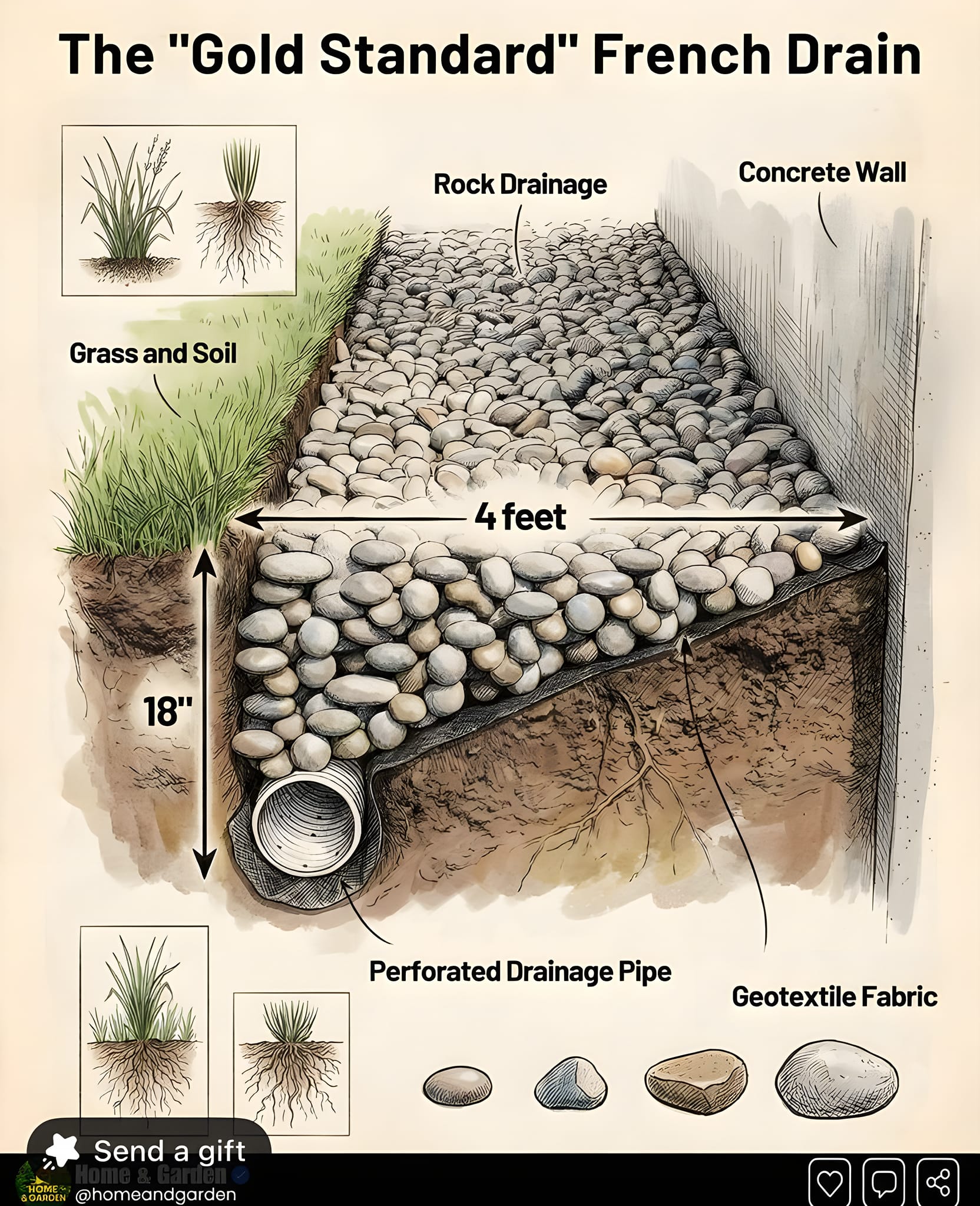
This image shows the most reliable French drain design used to protect foundations, retaining walls, and yards from water buildup. I’ll explain it clearly, just like a technician teaching a student 

 Step 1 – Mark and Dig the Trench:
 Dig a trench about 18 inches deep and around 4 feet wide along the wall or problem area.
 The trench should have a slight slope so water naturally flows away from the structure.
 Tip: Slope about 1 inch every 8–10 feet for best drainage.
✔️ Step 2 – Line with Geotextile Fabric: Lay geotextile fabric along the bottom and sides of the trench.
 This fabric prevents soil from clogging the rocks and pipe. Leave extra fabric on the sides so you can fold it over later.
✔️ Step 3 – Add the First Rock Layer: Pour a base layer of clean drainage gravel or river rock (no sand or dirt).
This layer supports the pipe and allows water to flow freely.
✔️ Step 4 – Install the Perforated Drain Pipe: Place the perforated pipe at the bottom of the trench.
 The holes should face downward or sideways so water enters from below.
Make sure the pipe follows the slope direction.
✔️ Step 5 – Cover the Pipe with More Rock: Fill the trench with gravel until it’s just below ground level.
 This rock layer is the main drainage zone, allowing water to move fast and safely
✔️ Step 6 – Fold the Fabric Over the Gravel: Wrap the leftover geotextile fabric over the top of the rocks.
This seals the system and keeps soil and roots out long-term. Step 7 – Finish with Soil and Grass: Add topsoil over the fabric and restore grass or landscaping.
 From the surface, the drain is invisible — but it’s working 24/7 underground.
 Why This Design Is the “Gold Standard:” Prevents foundation damage Reduces hydrostatic pressure Stops water pooling near walls Lasts decades with minimal maintenance
 Image Credit: Home & Garden (@homeandgarden)
📸 The Gold Standard🏅
 Email Us a Message

 Fly Over to the MMU Facebook Page with Hoot

 Join the MMU Facebook Group Today